Conformiteit
What is conformity as defined in the PPWR?
Compliance with the European Packaging and Packaging Waste Regulation (PPWR) requires all companies placing packaging on the EU market to demonstrate that their packaging meets sustainability and recycling requirements. The declaration of conformity is a key obligation under the PPWR.

From 12 August 2026, the following mandatory conformity requirements apply to manufacturers, importers, and distributors:
Declaration of conformity: Manufacturers (under the PPWR) must draw up a declaration of conformity for each type of packaging. This declares that the packaging complies with all relevant PPWR requirements.
Packaging dossier: A supporting dossier must be available, containing data on materials, weight, and environmental impact (minimization of packaging weight and volume). This must be made available to the Human Environment and Transport Inspectorate (ILT) upon request.
How do I prepare?
We have developed various resources to help you get started, such as a webinar, various tools and instruments, and—in collaboration with knowledge partners—training for industry associations. We have listed a number of resources to assist you further.
We are continuously expanding our range of resources. Subscribe for the PPWR newsletter and stay up to date.
Step 1: view the webinar about PPWR-conformity
The declaration of conformity is a key requirement under the PPWR. It confirms that packaging complies with applicable EU regulations. The declaration must contain specific information about both the packaging itself and the extent to which it meets the established requirements. Want to quickly understand what this means for you? Then watch our webinar first.
In it, we clearly explain:
- what a declaration of conformity is;
- who must prepare and receive it;
- when it becomes mandatory;
- what it must contain;
- how to prepare for it;
- what you can expect from Verpact.
Step 2: use one of the available online tools
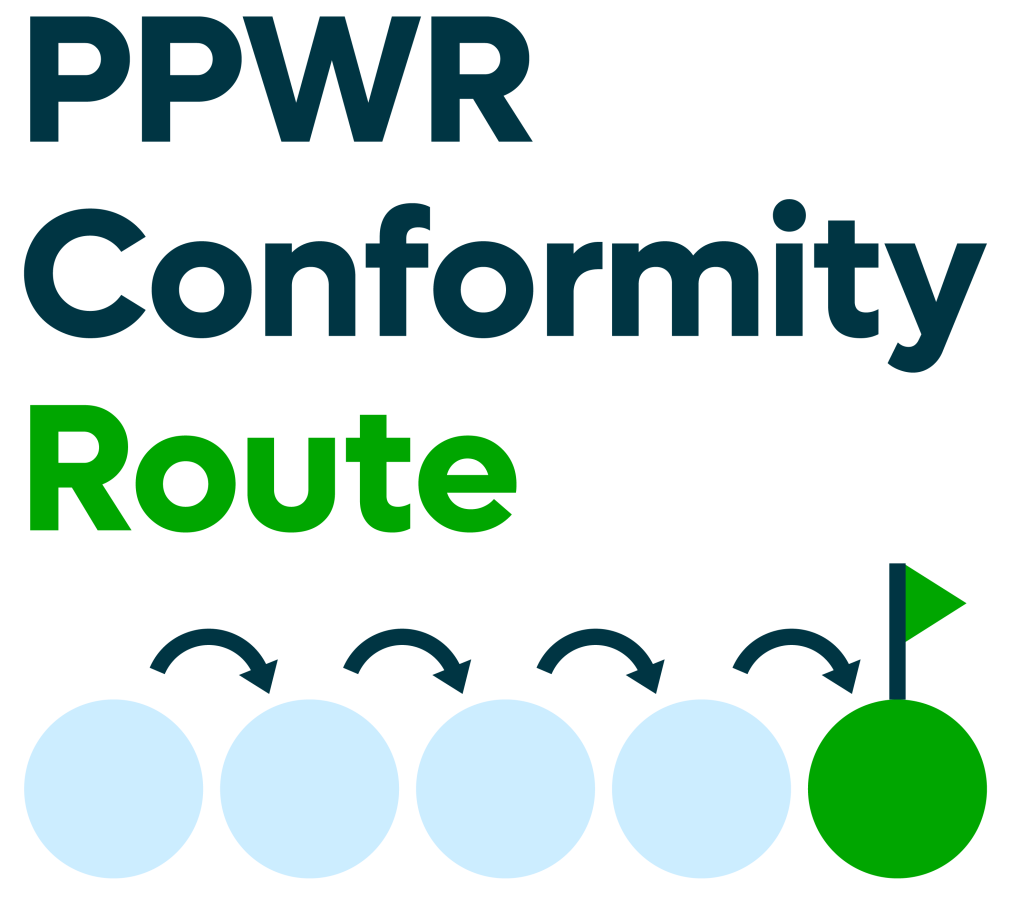
PPWR Conformity Route
The PPWR Conformity Route is a practical step-by-step guide that assists in preparing the PPWR declaration of conformity, the underlying conformity assessment, and the supporting technical documentation.
Here you'll find the PPWR Conformity Route®
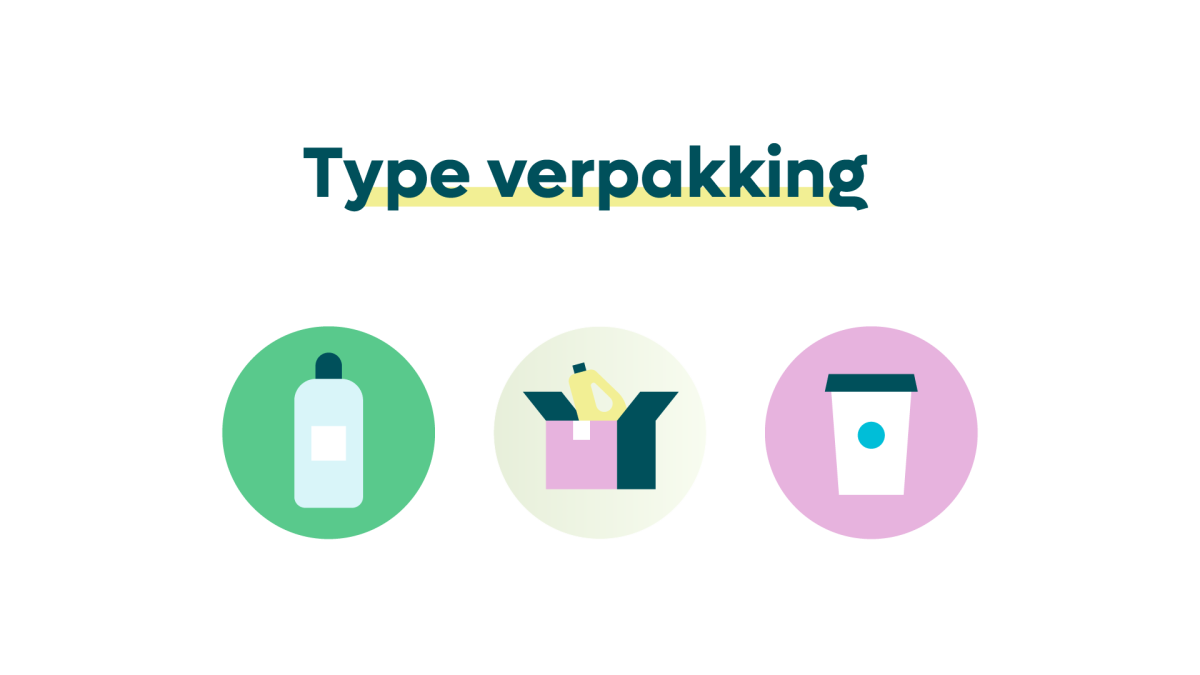
Roles and packaging types
Understanding the packaging type and your role is the starting point for determining how to ensure conformity (Step 1 of the PPWR Conformity Route).
Watch these video’s to see which roles and packaging the PPWR defines. Do you prefer to read? You can find a description of the packaging types here and of the rolls here.
Template for Declaration of Conformity and Assessment
Verpact has developed a template for a declaration of conformity and a tool for the conformity assessment. These provide practical support for documenting and substantiating the conformity of packaging with the requirements of the PPWR. They can be used as a guideline when preparing the required documentation and align with the steps of the PPWR Conformity Route®.*
Here you'll find the template voor Conformiteitsverklaring en -beoordeling
*Note: The templates are intended solely as an aid. Responsibility for establishing, substantiating, and declaring conformity as required by the PPWR lies entirely with the organization itself. Use of the templates and the resulting outcomes constitute a self-assessment from which no rights may be derived. The text of the PPWR regulation remains the authoritative source. Oversight and enforcement are the responsibility of the competent authorities.
PFAS in food-contact packaging (Article 5.5 PPWR)
In the spring of 2026, the EU Commission—together with bodies such as ECHA and EFSA—began work on non-binding guidance. This forthcoming guidance will cover:
Potential testing methods;
The primary sources of PFAS addition (e.g., layers, inks, recycled materials).
Since testing everything is not feasible, the approach involves "risk-based sampling." It also outlines factors to consider when determining when testing is required.
Stay up to date through the PPWR-newsletter for updates updates about PFAS in food-contact packaging.

Step 3: take a training course
Verpact has developed a training course in collaboration with partner consultants that focuses on the PPWR Conformity Route® created by Verpact. This practical step-by-step guide offers concrete tools for assessing, substantiating, and documenting packaging conformity with PPWR requirements. The training is facilitated by these partner consultants in cooperation with interested industry associations. Verpact does not provide conformity training itself.
The training offers:
- insight into the key PPWR requirements and their implications for your packaging;
- practical tools for systematically assessing and documenting conformity;
- interaction and opportunities to ask questions and share experiences based on concrete real-world examples.
Are you a member of an industry association? Check to see if your association can assist you with questions regarding conformity and whether they might already be organizing a training session or meeting featuring the Verpact PPWR Conformity Route®.
Are you an industry association looking to organize this type of training for your members? Please get in touch via the contact form. A Verpact expert will first hold an exploratory meeting to assess requirements and needs, and to explain the training's content and options. Based on this, we can recommend a suitable partner consultant; however, the final choice of partner consultant rests entirely with the industry association. Once the choice has been made, the association and the selected partner consultant jointly handle the further coordination, organization, and financial arrangements for the training.
Are you not a member of a trade association? Some sectors offer training courses to non-members as well. One such sector is the FNLI (Federation of the Dutch Food and Drink Industry); you can view their training offerings via the FNLI Academy. Another option is to engage a partner consultant (see step 4 below). In addition to providing advice, some of the four conformity partners also offer training courses. Check their websites for the most up-to-date information.
Step 4: engage a consultant
Verpact has a network of partner organizations with expertise in packaging, sustainability, and relevant laws and regulations. To help organizations find suitable support, we have listed these partners clearly on our website*. Take a look at the companies.
Partners for PPWR Compliance
To support the application of the PPWR Conformity Route®, Verpact is currently collaborating with the following partner consultants: PackSense, Partners for Innovation, GetPact, and Plato Product Consultants. These consultants are familiar with the principles and methodology of the PPWR Conformity Route®. The advice and services provided by these consultants are delivered independently and under their own responsibility.
*Organizations are solely responsible for selecting any collaboration partner; Verpact plays no role in this process. However, we do maintain active contact with the partner network by facilitating knowledge exchange and regularly updating partners on new developments, tools, and instruments from Verpact. Verpact is not a party to any agreements between organizations and partner consultants and accepts no responsibility or liability for the advice, services, or work provided by these organizations.
Conformity/Essential Requirements
What is the European Commission's position?
The European Commission has recently addressed Articles 6 (recyclability) and 10 (minimisation) in its guidance documents and in discussions with an expert group comprising various stakeholders.
It stated that, regarding both issues, while manufacturers must demonstrably comply with the obligations currently in force under EU packaging legislation (Directive 94/62)—as implemented in national law—they are not required to demonstrate this compliance in a declaration of conformity.
Compliance with current legislation means that the provisions of this directive (94/62) remain applicable and are monitored by the competent authorities. To ensure compliance, a manufacturer can use the relevant harmonized European standards:
Recyclability: EN 13430. Or by using Recyclass, the Verpact Recyclecheck, or Cotrep.
Minimization: EN 13428